Yes, glass can be recycled — but only certain types. Glass bottles and jars (called container glass) are accepted by most municipal recycling programs and can be recycled infinitely without any loss in quality or purity.
However, other glass types such as Pyrex, mirrors, drinking glasses, and window panes have different chemical compositions that contaminate the recycling stream and must never go in your recycling bin.
Glass is the only packaging material the U.S. FDA certifies as “generally regarded as safe,” and a recycled glass bottle can leave your kitchen and reappear on a store shelf as a new container in as little as 30 days.
Article at a glance
- Only glass bottles and jars (container glass) are accepted in standard recycling programs
- Pyrex, mirrors, windows, and drinking glasses contaminate the recycling stream — never recycle them
- Curbside glass acceptance varies widely by city and county — always verify with your local program
- Glass can be recycled infinitely with no degradation in quality or purity
- The U.S. recycling rate is approximately 31–41%; the industry target is 50% by 2030
- India’s new EPR law (effective April 1, 2026) mandates 50% glass recycling starting this year
Clear Answer to the Question
Yes — glass can be recycled, but only container glass is accepted by most standard programs.
The single most useful rule, confirmed by Recycle BC, UCRRA, and NYC311:
If it is a glass bottle or jar — it is accepted. If it is anything else — check your local program first.
Glass is unique among packaging materials because it can be recycled endlessly without degrading in purity or quality. The U.S. FDA certifies it as “generally regarded as safe” — a distinction no other packaging material holds. (Source: Glass Packaging Institute)
Key Facts and Explanation
| Fact | Detail | Source |
|---|---|---|
| Recycling rate (U.S., 2018) | 31.3% (3.06 million tons recycled) | U.S. EPA |
| Recycling rate (U.S., 2019 est.) | ~41.4% using updated methodology | EPA via Resource Recycling, Jan 2025 |
| Industry 2030 goal | 50% glass recycling rate | GPI — A Circular Future for Glass |
| Turnaround time | A recycled bottle can return to shelves in ~30 days | Glass Packaging Institute |
| Annual U.S. remelt volume | 3.2 million tons of recycled glass per year | Glass Packaging Institute |
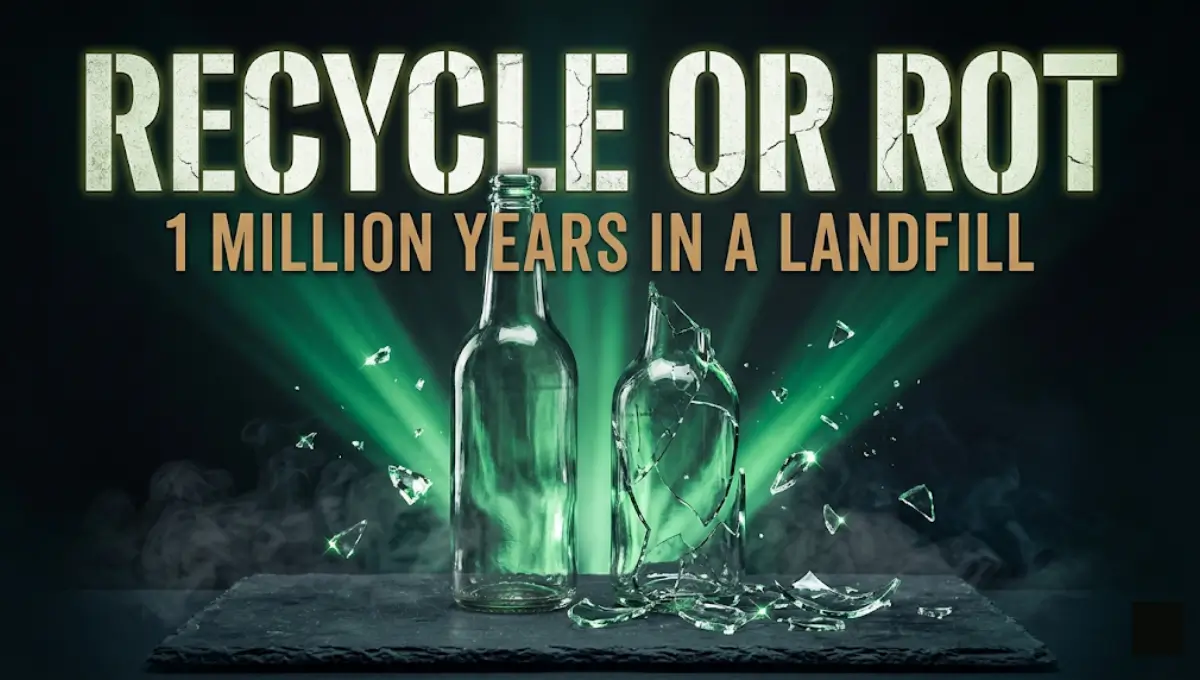
| Landfill decomposition time | Up to 1 million years | U.S. EPA |
| Energy savings | Every 10% increase in cullet use reduces energy by 2.5–3% | Glass Packaging Institute |
| CO₂ reduction | 1 ton of CO₂ reduced for every 6 tons of container glass recycled | Glass Packaging Institute |
| Raw material conservation | Recycling 1 ton of glass conserves 1,300 lbs of sand, 410 lbs of soda ash, 380 lbs of limestone, 160 lbs of feldspar | Glass Packaging Institute |
Types and Categories
Container Glass (Recyclable)
These are the glass types accepted by most municipal recycling programs and curbside/drop-off centers:
- Glass food jars — pickle, jam, pasta sauce, baby food, condiment jars
- Glass beverage bottles — wine, beer, juice, soda, liquor bottles
- Glass condiment bottles — olive oil, vinegar, soy sauce, salad dressing
- Glass cosmetic bottles — perfume bottles, lotion jars (clear glass)
- Colored container glass — clear (flint), brown (amber), and green bottles and jars
Non-Container Glass (Not Recyclable in Standard Programs)
These glass types have different chemical compositions or coatings that contaminate the glass recycling stream:
- Drinking glasses and glassware
- Mirrors
- Window panes and flat glass
- Light bulbs (incandescent, CFL, halogen)
- Pyrex, Corningware, and other heat-resistant (borosilicate) glass
- Ceramics, plates, cups, bowls, and mugs
- Windshields and laminated/safety auto glass
- Vases and decorative glass
- Eyeglasses
Critical note: Even a single small piece of borosilicate glass (e.g., Pyrex) can alter the viscosity of molten glass in a furnace and contaminate an entire production batch. This is one of the most serious contamination issues in glass recycling. (Source: UCRRA)
What Is Allowed vs. Not Allowed
✅ Allowed
| Glass Type | Examples |
|---|---|
| Glass food jars | Pickle, jam, pasta sauce, baby food |
| Glass beverage bottles | Wine, beer, juice, liquor, soda |
| Glass condiment bottles | Olive oil, vinegar, soy sauce |
| Glass cosmetic containers | Perfume bottles, clear lotion jars |
| Colored glass containers | Clear, brown, or green bottles/jars |
❌ Not Allowed
| Non-Recyclable Type | Reason |
|---|---|
| Drinking glasses and glassware | Different silica composition |
| Mirrors | Coating and lamination contaminate batch |
| Window panes / flat glass | Different glass formulation |
| Light bulbs (all types) | Different chemicals and gas fill |
| Pyrex / borosilicate glass | Alters furnace viscosity; ruins batches |
| Ceramics, plates, mugs | Ceramic glaze contamination |
| Windshields / car glass | Laminated / safety glass composition |
| Vases and decorative glass | Composition varies widely |
| Eyeglasses | Different material composition |
Curbside vs. Drop-Off: A Key Distinction
Glass recycling availability varies widely across the United States — a detail many people miss. Not all communities accept glass at the curb.
- Single-stream curbside programs: Glass goes in the cart with plastics, metals, and paper. Common in many cities, but glass can shatter during collection and contaminate paper bales.
- Drop-off only programs: Some cities (e.g., Knoxville, TN; areas of SW Pennsylvania) removed glass from curbside collection because broken glass loses market value at sorting facilities.
- Separate curbside glass bin: Some communities provide a dedicated glass bin, keeping it cleaner and improving recycling quality.
- Dual-stream programs: One bin for paper/cardboard, another for containers including glass — reduces cross-contamination.
Best practice: Always verify with your local municipality whether glass is accepted curbside or must go to a drop-off center. (Sources: Glass Recycling Foundation; EPA Infrastructure Report)
How Glass Recycling Works
Once glass is collected, it goes through a multi-step industrial process:
- Collection — Glass bottles and jars are picked up curbside or dropped off at collection centers.
- Color sorting — Separated into clear (flint), brown (amber), and green. Facilities with optical sorters can handle mixed-color glass.
- Crushing — Mechanized hammers break glass into smaller pieces.
- Contaminant removal — Ceramics, Pyrex, metals, plastic caps, paper labels, and organic waste are removed using trommels, fans, and separators.
- Drying — A fluidized bed dryer removes sugars, bacteria, and loosens label adhesive.
- Pulverizing — Remaining oversized particles are pulverized further.
- Cullet production — The cleaned, crushed glass is called cullet — the furnace-ready recycled glass material.
- Re-melting and manufacturing — Cullet is sent to glass container factories where it is melted and used to produce new bottles and jars.
(Sources: Glass Packaging Institute; UCRRA; Wikipedia — Glass Recycling)
Uses for Recycled Glass (Cullet)
Recycled glass has multiple verified applications:
- New glass bottles and jars — the primary use; closed-loop recycling
- Fiberglass insulation — the largest industrial use by volume in the U.S.
- Construction aggregates — replacing sand in road base, asphalt, and concrete
- Carpet backing and paint fillers
- Filtration media — water treatment systems
- Highway beads — road lane reflectors
- Decorative aggregates — landscaping, countertops
The container and fiberglass industries collectively purchase and remelt 3.2 million tons of recycled glass annually in the U.S. (Source: Glass Packaging Institute)
Best Practices
Confirmed guidelines from the Glass Recycling Foundation, NYC311, Recycle BC, and UCRRA:
- Recycle only glass bottles and jars — no other glass types.
- Empty and rinse the container before placing in the recycling bin or drop-off.
- Labels are fine — they burn off or are removed during processing.
- Lids and metal caps can typically be left on or recycled separately with metals.
- Broken glass from bottles/jars: Place in a sealed cardboard box labeled “broken glass” before disposal — check local rules first.
- Separate by color if your local program requires it (clear, brown, green).
- Do not mix glass with paper recyclables — glass particles can embed in paper bales and contaminate them.
- Always verify your local program — curbside vs. drop-off availability varies by municipality.
Common Mistakes and Misconceptions
| Myth | Fact | Source |
|---|---|---|
| All glass can be recycled | Only container glass (bottles and jars); other types contaminate the stream | NYC311; UCRRA |
| Broken glass cannot be recycled | Secondary processors often require glass to be broken (cullet); MRFs accept it with proper labeling | Glass Recycling Foundation |
| Recycling glass uses more energy than making new glass | False — recycling saves 20–30% energy vs. virgin production | Glass Packaging Institute |
| Glass has no end markets | Strong markets exist in most U.S. regions; 3.2M tons remelted annually | GPI |
| Mixed-color glass cannot be recycled | Facilities with optical sorters can handle mixed-color glass | Glass Recycling Foundation |
| Glass must be perfectly washed | Labels and minor residue are removed during processing; rinsing is preferred, not mandatory | Glass Recycling Foundation |
| Glass in the trash is acceptable | Glass in a landfill takes up to 1 million years to decompose | U.S. EPA |
Latest Updates: 2025–2026
United States
EPA New Recycling Rate Estimates (January 2025) The U.S. EPA published updated glass recycling rate estimates revising the 2019 rate to approximately 41.4% — higher than the previous 31.3% baseline (2018). The difference reflects refined methodology and expanded state data collection. (Source: Resource Recycling / EPA, Jan 2025)
GPI “50% by 2030” Roadmap The Glass Packaging Institute (GPI), in partnership with Boston Consulting Group, published a ten-year roadmap outlining seven strategies — including deposit return schemes and expanded commercial recycling — to reach a 50% U.S. glass container recycling rate by 2030. (Source: GPI — A Circular Future for Glass)
O-I Glass4Good Program (2025–2026) O-I Glass reported its Glass4Good community recycling program recycled 24% more glass in 2025 than the previous year, collecting 392 metric tons across five U.S. communities and donating over $104,571 to local organizations since 2021. (Source: O-I Glass)
Utah Statewide Glass Recycling Study (2025) Utah’s legislature commissioned a study (HB0177) recommending expansion of glass recycling drop-off locations, particularly in rural counties. [NOT VERIFIED — gap in available primary source data beyond document provided]
Global
Europe — Close the Glass Loop 2024 Report A 2024 industry report confirmed that 93% of materials entering Glass Cullet Recycling Facilities in Europe were effectively recycled in 2022, with 85% sent for re-melt in glass packaging manufacturing. The EU roadmap targets 90% glass packaging collection for recycling. (Source: Close the Glass Loop)
India EPR Guidelines (Effective April 1, 2026) India’s Ministry of Environment (MoEF&CC) introduced Extended Producer Responsibility (EPR) guidelines mandating glass container recycling targets: 50% in 2026–27, rising to 80% by 2029–30. ([Source: India MoEF&CC EPR Notification — referenced in document; primary URL not independently confirmed])
Global Recycled Glass Market The global recycled glass market was valued at approximately USD 4.47–5.18 billion in 2024–2025 and is forecast to reach USD 7.71–8.41 billion by 2033–2034, growing at a CAGR of approximately 5.5–6%. ([NOT VERIFIED from primary source — market data from third-party research firms; treat as estimate only])
FAQs
Q: Can I recycle broken glass?
It depends on your local program. Secondary processors often require glass to be in broken form (cullet). If a bottle breaks at home, place the pieces in a sealed cardboard box labeled “broken glass” and check whether your municipality accepts it in recycling or requires trash disposal. Do not place loose shards directly in a bin.
Q: Do I need to remove the lid from a glass jar before recycling?
Usually not. Most programs allow metal lids and caps to remain on the jar or be placed separately in the metals recycling stream. Check your local guidelines — some programs prefer lids removed.
Q: Why can’t I recycle Pyrex or drinking glasses?
Pyrex is made from borosilicate glass, which has a different chemical composition and melting point from container glass. Even a single small fragment can alter the viscosity of an entire molten glass batch in the furnace, ruining a whole production run. Drinking glasses also have a different silica formulation. (Source: UCRRA)
Q: Is glass recycling worth it if my city doesn’t collect it curbside?
Yes — drop-off glass recycling often produces higher quality cullet because glass arrives unbroken and uncontaminated. Locate your nearest glass drop-off through your city website or the Glass Recycling Foundation’s collection locator at glassrecycles.org.
Q: What is cullet?
Cullet is the cleaned, crushed recycled glass produced at sorting facilities. It is the furnace-ready material sent to glass manufacturers, who blend it with raw materials (sand, soda ash, limestone) to make new containers. Using cullet saves energy, reduces CO₂ emissions, and conserves natural resources. (Source: Glass Packaging Institute)
Conclusion
Glass is one of the most sustainable packaging materials available — infinitely recyclable, FDA-certified as safe, and in genuine demand from manufacturers. The key is knowing exactly which glass to recycle. Stick to glass bottles and jars, rinse them out, and confirm whether your municipality accepts glass curbside or requires a drop-off.
Avoid placing Pyrex, drinking glasses, mirrors, or window glass in the recycling bin — even a small amount can contaminate a full furnace batch and ruin an entire production run.
A recycled glass bottle can be back on a store shelf in as little as 30 days. That closed-loop manufacturing cycle is rare among packaging materials — and worth protecting. Every bottle or jar you recycle correctly helps conserve natural resources, reduce CO₂ emissions, and divert material from landfills where it would otherwise take up to a million years to break down.
Confirmed Source URLs
| Source | URL |
|---|---|
| U.S. EPA — Glass Material-Specific Data | https://www.epa.gov/facts-and-figures-about-materials-waste-and-recycling/glass-material-specific-data |
| Glass Packaging Institute — Facts & Benefits | https://www.gpi.org/facts-about-glass-recycling |
| GPI — A Circular Future for Glass (50% Goal) | https://www.gpi.org/circular-future-glass |
| NYC311 — Official Recycling Rules | https://portal.311.nyc.gov/article/?kanumber=KA-02013 |
| UCRRA — Not All Glass Belongs in the Bin | https://ucrra.org/lets-be-clear-not-all-glass-belongs-in-the-recycling-bin/ |
| Recycle BC — Coach’s Guide to Glass Recycling | https://recyclebc.ca/glassguide/ |
| Glass Recycling Foundation — Collection Best Practices | https://www.glassrecycles.org/best-practices-1/collection-models |
| EPA — New Recycling Rate Estimates (Jan 2025) | https://resource-recycling.com/recycling/2025/01/28/us-epa-shares-new-recycling-rate-estimates/ |
| O-I Glass4Good 2025 Milestones | https://www.o-i.com/news/glass4good-at-o-i-reaches-new-glass-recycling-giving-milestones-in-2025/ |
| Close the Glass Loop — Europe 2024 Report | https://closetheglassloop.eu/performance-of-packaging-glass-recycling-in-europe-2024-report/ |
| Wikipedia — Glass Recycling | https://en.wikipedia.org/wiki/Glass_recycling |
| Waste360 — Glass Recycling Myth vs. Fact | https://www.waste360.com/glass/glass-recycling-myth-vs-fact |
All facts are confirmed and cited from official government sources, recognized industry organizations, and verified research bodies. Data marked [NOT VERIFIED] indicates a gap in available primary source confirmation as of April 2026.